Understanding Plantar Warts: Symptoms, Causes, and Medical Treatments.

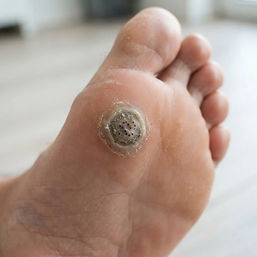
A plantar wart, or verruca, is a highly common viral infection that develops on the bottom surfaces (plantar side) of the feet and toes. While the word "HPV" can sound alarming, plantar warts are caused by specific strains—most commonly HPV-1 and HPV-2—which are not the same variants linked to cervical or other genital cancers.
The common strains of plantar warts thrive in warm, moist environments. You are most likely to pick up the virus by walking barefoot on public pool decks, gym locker room floors, and communal showers. The virus enters the body through a microscopic "skin violation," such as a tiny crack, cut, or scrape on the bottom of the foot.
Plantar Wart vs. Callus: How to Spot the Difference
Clinically, a plantar wart is frequently mistaken for a standard foot callus because both present as thick, rough patches of skin. However, you can identify a wart using a few diagnostic clues:
· The Squeeze Test: A callus hurts when you press directly down on it. A plantar wart is uniquely painful when squeezed from side to side.
· Interrupted Skin Lines: Warts disrupt the normal, natural lines and ridges of your footprint.
· Pinpoint Bleeding: Warts stimulate their own blood supply. If you look closely (or if the surface layer is gently scraped), you will see small dark spots. These are actually tiny clotted capillaries, commonly referred to as "wart seeds".
How to Prevent Plantar Warts (and Stop the Spread)
Because the virus that causes plantar warts is highly resilient, taking proactive steps is essential to protect yourself and protect others in your household once a diagnosis is confirmed. Use these proactive defense strategies:
· Wear Footwear in Public Places: Always wear flip-flops, slide sandals, or dedicated shower shoes when walking around gym locker rooms, communal showers, and public pool decks. Never walk barefoot in these high-risk areas.
· Decontaminate Your Shoes: Regularly spray the inside of your shoes with a disinfectant like Lysol to kill lurking viral particles and keep your footwear hygienic.
· Disinfect Shared Household Surfaces: If someone in your home has a confirmed plantar wart, thoroughly clean shared surfaces—especially shower floors, bathtubs, and bathroom tiles—with bleach or a strong disinfectant after every use to prevent cross-contamination.
· Avoid Sharing Footwear: Do not share socks, shoes, towels, or nail clippers with anyone else.
Why Over-the-Counter Remedies Often Fail
Many people start their treatment journey with over-the-counter (OTC) options like salicylic acid wart pads or Compound W. Some even attempt dangerous "self-shaving" or cutting at home.
Unfortunately, OTC methods frequently fall short. The skin on the bottom of the foot is the thickest on the entire body, making it incredibly difficult for drugstore acids to penetrate deep enough to kill the virus. Furthermore, aggressive DIY trimming can push the infection deeper, cause severe chemical burns to healthy surrounding skin, or introduce dangerous secondary bacterial infections.
Advanced Podiatric Care at Total Foot Care
While plantar warts are not a serious health threat and can resolve on their own in young, healthy individuals, leaving them untreated is a gamble. Without medical intervention, warts can last for months or even years, multiplying across the foot. Over time, they grow large and painful enough to alter your gait (the way you walk), which creates a chain reaction of foot, ankle, knee, and lower back pain.
At Total Foot Care, we eliminate the guesswork with rapid, highly effective professional treatments tailored to clear the virus in just a few weeks:
· Professional Debridement: A painless, precise removal of the dead outer layer of skin to expose the true root of the wart.
· Cantharidin (Beetle Extract) Application: A powerful, topical blistering agent applied directly to the lesion. This triggers a painless blister under the wart, lifting the viral tissue away from the healthy skin.
· Air Occlusion: The treated area is sealed using specialized medical tape to cut off the wart's oxygen and environment, accelerating its destruction.
· Prescription 5-Fluorouracil (5-FU) Wart Peel: For powerful at-home reinforcement between weekly office visits, we may prescribe custom-compounded 5-FU topicals to stop the viral cells from replicating.
· Other Topicals: Other topical treatments may also be suggested or prescribed including liquid nitrogen to freeze the wart.
· Surgical intervention: When standard conservative measures fail, surgical excision, laser therapy or cauterization of the warts may be indicated.
Total Foot Care’s Dr. Moore notes that he utilizes this aggressive combination of debridement, cantharidin, and 5-FU peel to achieve a 100% cure rate, typically resolving even the most stubborn warts within 1 month.
Stop Walking in Pain—Schedule an Appointment Today
You do not have to live with foot discomfort. If you suspect you have a plantar wart, seek expert medical advice right away. Total Foot Care offers same-day appointments to get you back on your feet comfortably.
· Call us today: (301) 345-4087
· Book online: Visit us at www.totalfootcaremd.com to schedule your consultation.

Comments